The James R. and Susan Neumann
Jazz Collection presents
 |
| the neUmann DIGITization project |

Why, in general, did you want to take part in this project?
I wanted to utilize this awesome collection that we have at Oberlin. Once I graduate, being able to explore a collection like this will be difficult at best.
Why did you choose this particular record?
I have never heard any recordings with Booker Little and Eric Dolphy together. Both of these artists are able to use the full range of their instruments texturally and timbrally. Richard Davis is one of my favorite bass players and greatly influenced Peter Dominguez (Oberlin Bass Professor), who studied under Davis at the University of Wisconsin for a number of years. Davis was one of the first musicians to bridge the gap between jazz and classical music. He is one of the first black musicians to ever be in a major symphony. The whole band consists of masters of their trade, who all see eye to eye musically.
I also chose a live record because the musicians have more time to
develop and stretch their solos, as opposed to a studio recording where solos
were generally shorter.

Besides the fact that the fidelity of listening online is questionable and it is almost impossible to find high quality recordings (.wav or .aiff), listening to an analog record has a warmness that is just not there when listening to a digital recording. You are also forced to listen to a performance the entire way through, and in doing so you can only listen to a performance as a whole.
What
would you recommend future listeners listen for on this recording?
There are only three tracks, all of which are very different stylistically. Each track does not stay in one place for very long, and there is a lot of development among the entire band during the solos. I would highly recommend listening to the album in its entirety, but each track does stand out on its own. If any future listeners have not listened to Eric Dolphy, I would say that they should prepare themselves for a very unique listening experience. This record is sa-weet.
There are only three tracks, all of which are very different stylistically. Each track does not stay in one place for very long, and there is a lot of development among the entire band during the solos. I would highly recommend listening to the album in its entirety, but each track does stand out on its own. If any future listeners have not listened to Eric Dolphy, I would say that they should prepare themselves for a very unique listening experience. This record is sa-weet.


 NEW YORK, N.Y. Nov. 5
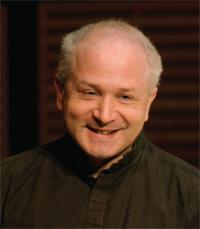 George Benjamin began studies at age 15 with Olivier Messiaen at the Paris Conservatoire. His first orchestral work, Ringed by the Flat Horizon,
was written at 20 and conducted by Pierre Boulez. A spectacular career
ensued, with works for varied instrumental combinations creating rich
textures and harmonic beauty. His sharp ear for poetry and precision was
thrillingly revealed in his 2012 opera, Written on Skin,
premiered at the Aix-en-Provence Festival, and available on a Nimbus CD
set and DVD. In nearly 40 international performances, it has received
universal praise. The piece tells one of the oldest stories in the
world, a triangular tale of sexual curiosity, rhapsodic love, and
violent jealousy. But it does so in a language all its own, at once
exquisitely wrought and devastatingly raw. When Written on Skin received its U.S. premiere in concert at Tanglewood's Festival of Contemporary Music in August, Jeremy Eichler in the Boston Globe
called it a "complexly beautiful 21st-century score, one that carries
forward the worlds of Debussy and Berg without surrendering to either
one." That performance was recorded by the Festival and will receive its
world webcast premiere on New York's
George Benjamin began studies at age 15 with Olivier Messiaen at the Paris Conservatoire. His first orchestral work, Ringed by the Flat Horizon,
was written at 20 and conducted by Pierre Boulez. A spectacular career
ensued, with works for varied instrumental combinations creating rich
textures and harmonic beauty. His sharp ear for poetry and precision was
thrillingly revealed in his 2012 opera, Written on Skin,
premiered at the Aix-en-Provence Festival, and available on a Nimbus CD
set and DVD. In nearly 40 international performances, it has received
universal praise. The piece tells one of the oldest stories in the
world, a triangular tale of sexual curiosity, rhapsodic love, and
violent jealousy. But it does so in a language all its own, at once
exquisitely wrought and devastatingly raw. When Written on Skin received its U.S. premiere in concert at Tanglewood's Festival of Contemporary Music in August, Jeremy Eichler in the Boston Globe
called it a "complexly beautiful 21st-century score, one that carries
forward the worlds of Debussy and Berg without surrendering to either
one." That performance was recorded by the Festival and will receive its
world webcast premiere on New York's 
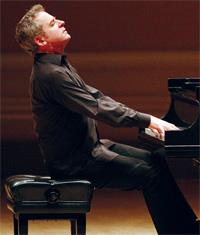 Jeremy Denk has been called "one of his generation's most eloquent and thoughtful interpreters" (New York Times). His flourishing concert schedule, the second release in his Nonesuch recording contract (Bach's Goldberg Variations), his widely read blog called "Think Denk," and articles for the New Yorker,
which led to a Random House book commission, attest to his
multi-faceted artistry. As music director for the 68th annual Ojai Music
Festival in 2014, he will not only perform on piano but also write his
first opera libretto in collaboration with composer Steven Stucky, based
on the late Charles Rosen's The Classical Style. In September,
Denk was named a 2013 MacArthur Fellow. Popularly known as a "genius
award," it is presented to "an extraordinary group of individuals who
collectively reflect the breadth and depth of American creativity" and
involves a stipend of $625,000.
Jeremy Denk has been called "one of his generation's most eloquent and thoughtful interpreters" (New York Times). His flourishing concert schedule, the second release in his Nonesuch recording contract (Bach's Goldberg Variations), his widely read blog called "Think Denk," and articles for the New Yorker,
which led to a Random House book commission, attest to his
multi-faceted artistry. As music director for the 68th annual Ojai Music
Festival in 2014, he will not only perform on piano but also write his
first opera libretto in collaboration with composer Steven Stucky, based
on the late Charles Rosen's The Classical Style. In September,
Denk was named a 2013 MacArthur Fellow. Popularly known as a "genius
award," it is presented to "an extraordinary group of individuals who
collectively reflect the breadth and depth of American creativity" and
involves a stipend of $625,000.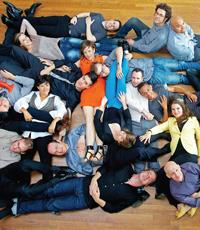 The
International Contemporary Ensemble, popularly known as ICE, has
distinguished itself from the many excellent new-music groups in several
ways. For starters, it has avoided being typecast in any particular
contemporary style and performs yearly at Lincoln Center's Mostly Mozart
Festival. Since its founding in 2001, ICE has performed over 500 works,
most of them by emerging composers. The ensemble has released albums on
the Bridge, Naxos, and Nonesuch labels, among others, and launched its
own label, Tundra. It has its own educational program, aimed at
instructing students in the challenges of ensemble performance. ICE
aspires to reaching millions of people a year, live and online. "We talk
regularly about how fun it would be to play in outer space," says ICE
founder Claire Chase, a MacArthur Fellow in 2012. "I am dead serious
with a smile on my face."
The
International Contemporary Ensemble, popularly known as ICE, has
distinguished itself from the many excellent new-music groups in several
ways. For starters, it has avoided being typecast in any particular
contemporary style and performs yearly at Lincoln Center's Mostly Mozart
Festival. Since its founding in 2001, ICE has performed over 500 works,
most of them by emerging composers. The ensemble has released albums on
the Bridge, Naxos, and Nonesuch labels, among others, and launched its
own label, Tundra. It has its own educational program, aimed at
instructing students in the challenges of ensemble performance. ICE
aspires to reaching millions of people a year, live and online. "We talk
regularly about how fun it would be to play in outer space," says ICE
founder Claire Chase, a MacArthur Fellow in 2012. "I am dead serious
with a smile on my face."

 Posts
Posts

